Shea Butter Pressing SOP — West African Production
SOP for unrefined shea butter extraction. Shea melts at ~ 34 °C — both cold and hot pressing work, with different yield and quality outcomes. Cold-press (HN426, ≤ 60 °C) preserves premium cosmetic-grade quality; hot-press (120 °C roast) maximizes yield for food-grade production.
Haonuo presses extract 40–48 % yield from shea nuts. Two production paths: cold-press on HN426 (≤ 60 °C, 40–43 % yield, cosmetic-grade premium) and hot-press with 120 °C roast (45–48 % yield, food-grade). Batch 80–100 kg, cycle 45–55 min hot / ≈ 2 h cold. Residual oil in cake 6–8 %.
Cold vs hot — two production paths
Shea butter melts at 34–38 °C, so unlike mustard or groundnut, its behaviour differs sharply depending on press temperature. At 40 °C and above, the fat softens enough for hydraulic pressing — this is why cold-press HN426 works for shea (its ≤ 60 °C operating range is above the melting point). The trade-off is yield: cold-press keeps more unsaturated fat intact (cosmetic-grade premium) but releases slightly less total fat. Hot-press at 120 °C maximizes yield (food-grade bulk) but darkens the butter and lowers vitamin content.
HN426 — cosmetic-grade
- • Pre-treatment: light roast 40–50 °C (optional), then grind
- • Press temp: ≤ 60 °C
- • Cycle: ≈ 2 h / 100 kg batch
- • Yield: 40–43 % (cleaner fat, higher premium)
- • Target buyer: cosmetic companies, organic retailers
Any Haonuo press — food-grade
- • Pre-treatment: roast 25–30 min at 120 °C
- • Press temp: ~ 80 °C after roasting
- • Cycle: 45–55 min / 100 kg batch
- • Yield: 45–48 % (maximum total fat)
- • Target buyer: food processors, bulk exporters
- 1
Crack & clean shea nuts
Remove shells and foreign matter. Sort by size — uniform size = uniform roasting.
- 2
Roast 25–30 min at 120 °C (hot-press) or skip (cold-press)
Hot-press: traditional wood-fired or electric roaster at 120 °C — this is non-negotiable for maximum yield, as shea fat liquefies fully only above 100 °C. Cold-press: skip roasting or do a light 40–50 °C warm-up only. Roasting browns the nuts, softens cell walls, and lowers fat viscosity. Do not burn.
- 3
Grind into fine paste
Seed crusher or stone mill. Target particle size ≤ 3 mm. Shea paste is malleable, not powdery — this is correct.
- 4
Hydraulic pressing
Load 80–100 kg paste. Hot-press: 35–42 MPa, cycle 45–55 min, butter flows at ~ 80 °C. Cold-press (HN426): ≤ 60 °C, cycle ≈ 2 h, butter flows at ~ 50 °C. Cold-press yield is 40–43 % vs 45–48 % hot-press, but the premium cosmetic-grade quality justifies it.
- 5
Filter & cool
Shea butter solidifies at room temperature. Filter while warm (~ 40 °C), then pour into moulds and let set.
100 kg shea nut paste — what you get (cold vs hot)
| Output | Cold-press (HN426, ≤ 60 °C) | Hot-press (120 °C roast) |
|---|---|---|
| Crude shea butter yield | 40–43 kg | 45–48 kg |
| Residual oil in cake | 6–8 % | 6–8 % |
| Cake (by-product) | ~ 57–60 kg (fertilizer) | ~ 52–55 kg (fertilizer) |
| Cycle time / batch | ≈ 2 h | 45–55 min |
| Butter grade | Cosmetic-grade premium | Food-grade bulk |
Recommended Haonuo models
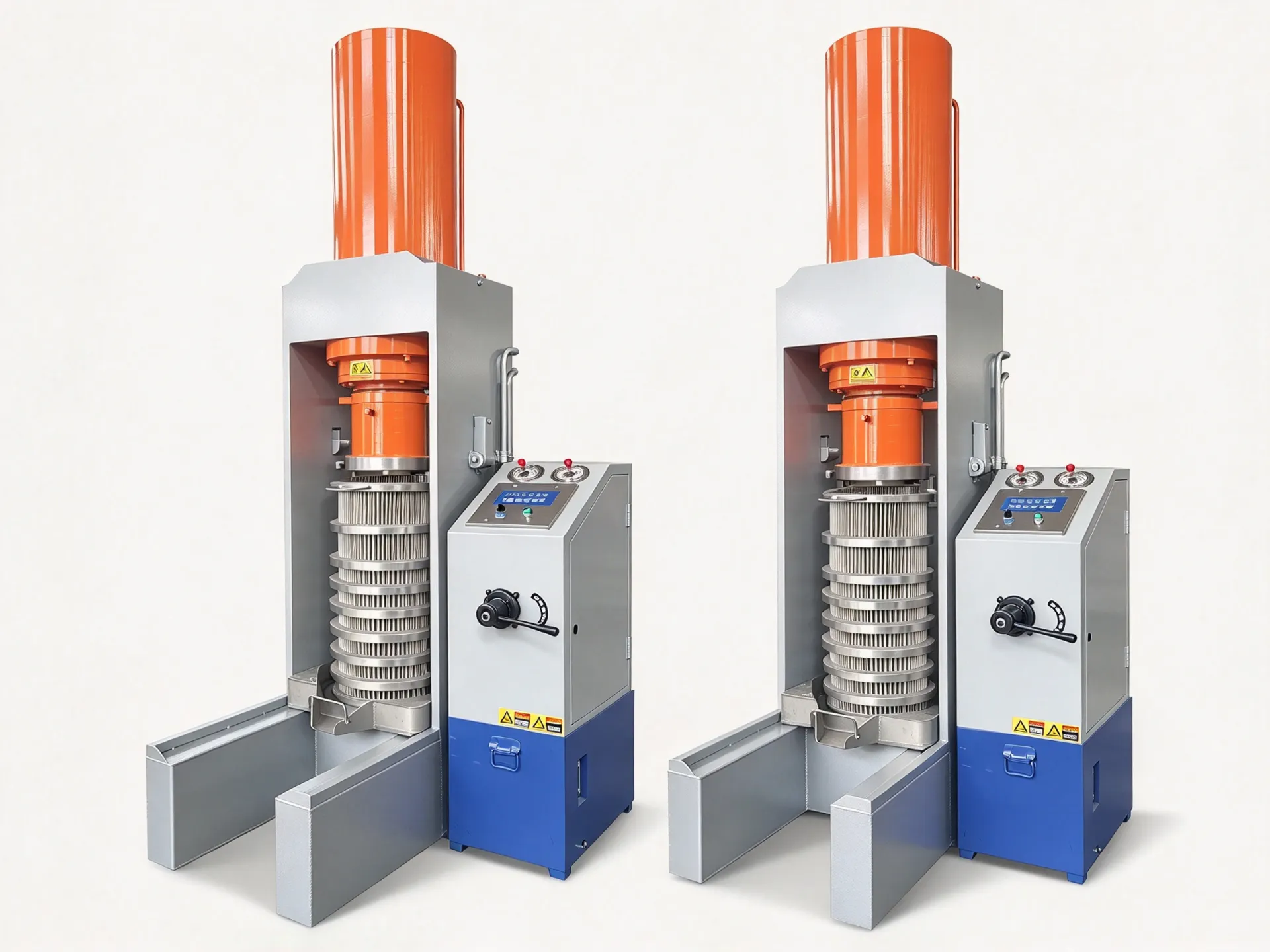
Cold & Hot Shea Line
500 t / 42 MPa. Handles both cold-press cosmetic-grade and hot-press food-grade shea. The 2 h cold cycle keeps unsaturated fats intact for premium buyer pricing.
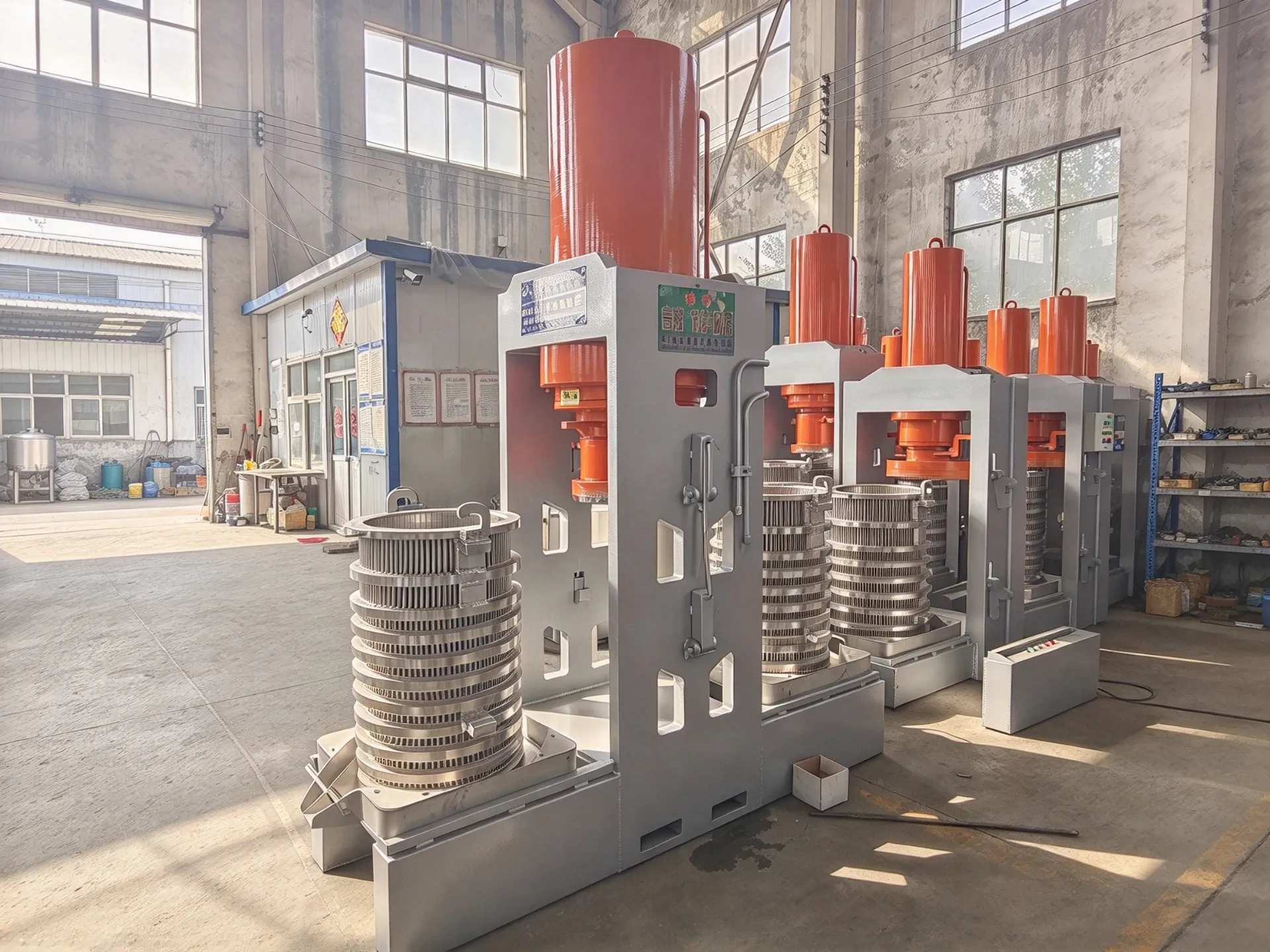
Industrial Scale
620 t / 52 MPa. For multi-ton/day shea butter operations. Handles harder shell varieties with consistent residual oil in cake.
See the Shea Butter Solution page for more. Ghana / Nigeria / Burkina Faso references available.