Sludge Dewatering Hydraulic Press
Model: HN325 Large Tabung Press
Sludge Dewatering Hydraulic Press: Specifications
| Model (Single/Double) | HN325LB Simple / HN325LB Double |
|---|---|
| Motor Power | 2.2 KW |
| Cylinder Outer Diameter | 325 mm |
| Cylinder Stroke | 850 mm |
| System Pressure | 60 MPa |
| Cake Surface Pressure | 10.64 MPa |
| Tabung Press Inner Diameter | 630 mm |
| Tabung Press Height | 1000 mm |
| Machine Weight (Single/Double) | ~2,5 / ~3,5 Tonnes |
| Equipment Dimensions (Single/Double) | 1400×2100×2900 / 2700×2100×2900 mm |
| Top Cake Cylinder (Single/Double) | 60 Tonnes / 30 MPa / 60 Tonnes / 30 MPa |
| MOQ | 1 Set |
Sludge Dewatering Hydraulic Press: Recommended Oil Seeds
These seeds are particularly recommended for this machine model. However, it can also process most other oil seeds with excellent results. Contact us if you have questions about a specific seed.
Sludge Dewatering Hydraulic Press: Description
Overview
Custom Configuration — This is a made-to-order hydraulic sludge dewatering press with a 630 mm large tabung press, optimized for oil sludge, oil residue, and industrial sludge dewatering. Production lead time is 30–45 working days. Request a custom quote →
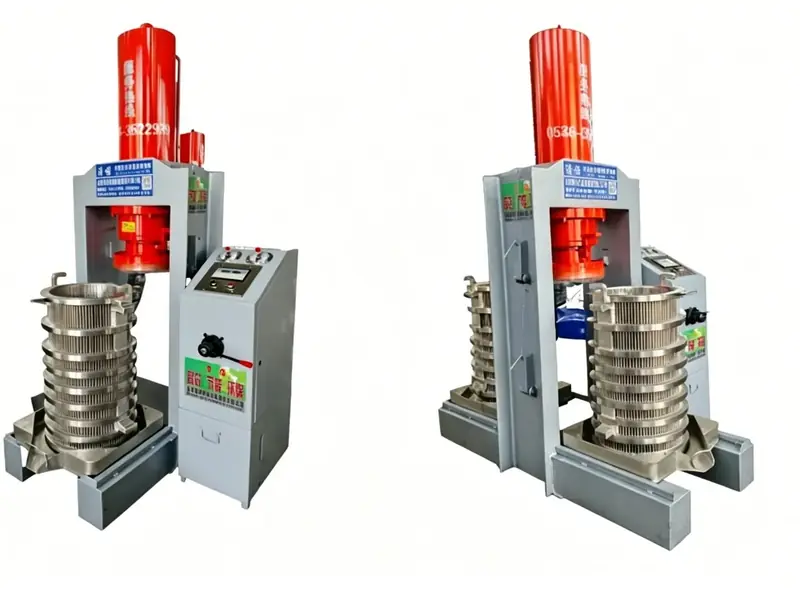
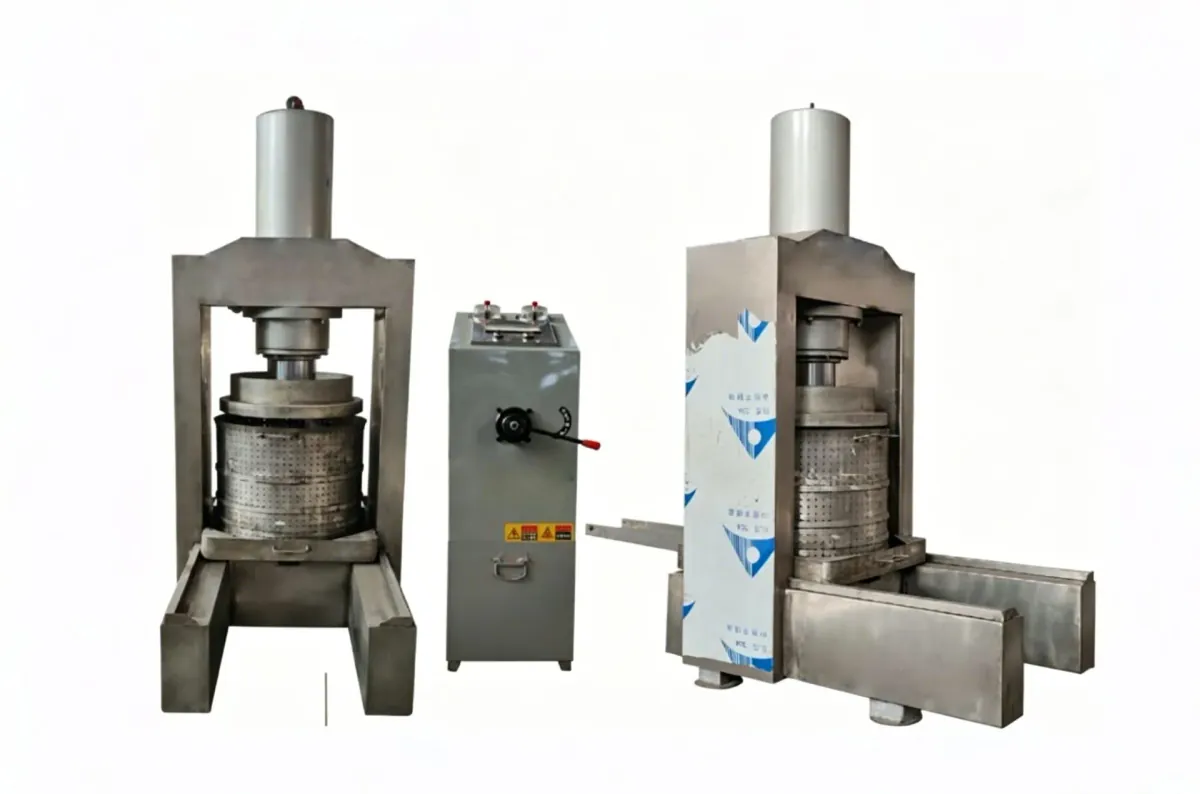
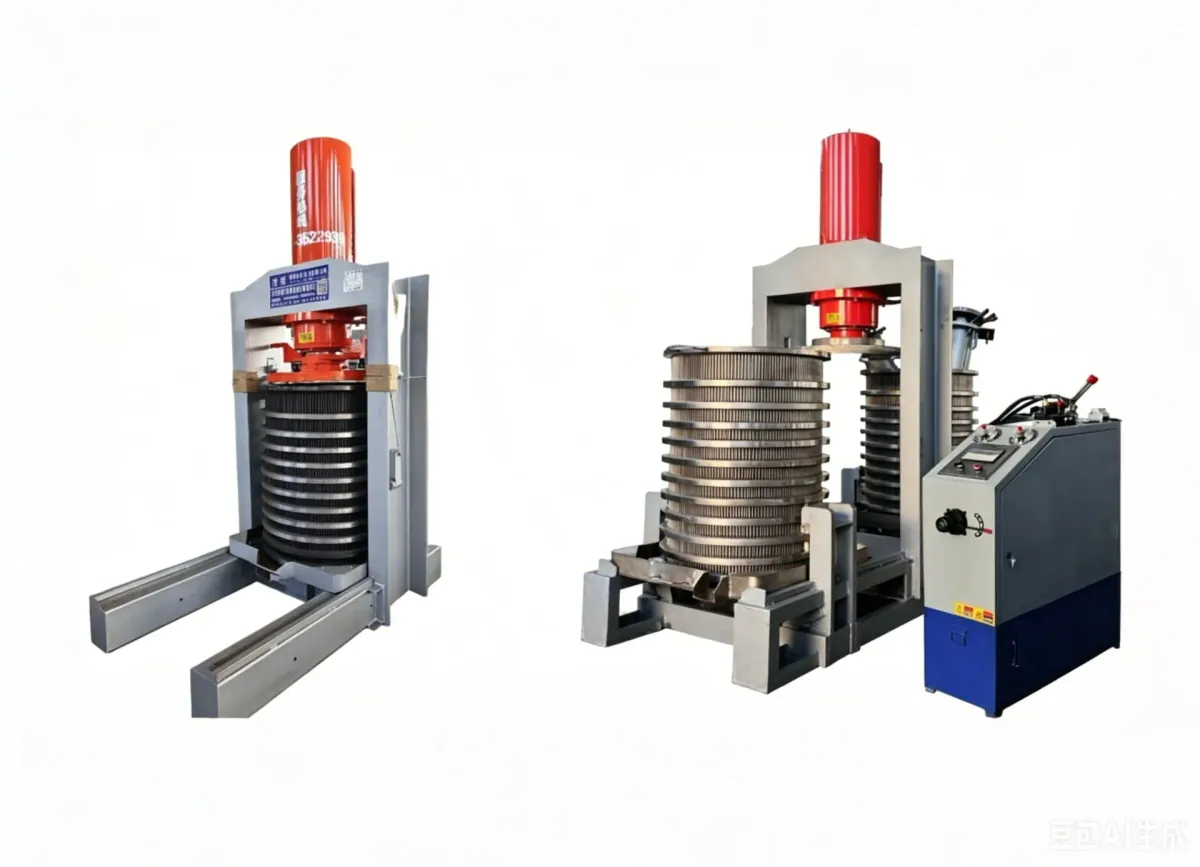
The HN325 Large Tabung Press is a hydraulic dewatering press with a 630 mm inner diameter, 1000 mm high tabung press and two independent hydraulic systems, so one tabung press presses while the other is unloaded and reloaded. It is built for processors that prioritize single-batch volume for sludge and residue dewatering rather than peak pressing force.
The dual-system design eliminates idle time: the main cylinder presses one tabung press while the top-cake cylinder on the other tabung press allows simultaneous unloading and reloading. With a cake surface pressure of 10.64 MPa, this model is suited for materials that do not require high pressing force but benefit from large batch sizes — such as oil sludge, animal/plant oil residue, textile sludge, and fruit/vegetable dehydration.
Key Advantages
- Massive Tabung Press Capacity — 630 mm inner diameter × 1000 mm height tabung press handles large volumes per batch, reducing the number of cycles needed to process bulk sludge and residue.
- Dual Independent Hydraulic Systems — Each tabung press operates independently with its own hydraulic circuit, so pressing on one side never blocks loading or unloading on the other.
- Top-Cake Design — The top-cake cylinder (60 tons / 30 MPa) pushes the cake out from the top, making unloading fast and convenient even with large-volume materials.
- High Throughput — Combined large tabung press capacity and dual-system operation deliver the highest daily processing volume for low-pressure dewatering applications.
- Versatile Dewatering — From oil residue dewatering to fruit juice extraction and industrial sludge processing, one machine serves multiple processing needs.
Core Technology
- Bar-Type Slotted Tabung Press — Haonuo’s proprietary slotted tabung press design provides significantly more drainage area than traditional drilled tabung press. Liquid flows faster and clearer. No clogging, no cleaning between batches — especially beneficial for high-volume sludge and residue processing.
- German Hydraulic System — Ultra-high pressure combined hydraulic pump station with high-low dual pump. Working pressure up to 60 MPa with rapid cylinder return.
- 4-Hook Cake Removal — Innovative 4-hook mechanism ensures easy, reliable cake discharge — even after overnight pressing of bulky materials.
- High Carbon Steel Frame — High-frequency quenched and heat-treated steel for long-lasting service. Actual service life depends on operating conditions and maintenance.
- Microcomputer Control — Automated pressing cycle from loading to finished cake discharge.
- Energy Efficient — 2.2 kW motor keeps operating costs low while delivering 325-ton pressing force.
- Labor Efficient — Only 1-2 operators needed.
Applications & Suitable Materials
Oil & Fat Residue Dewatering
- Animal oil residue, plant oil residue, oil sludge
Industrial & Environmental Dewatering
- Textile sludge, oil field sludge and waste
Food Processing Dehydration
- Fruit and vegetable dehydration, fruit juice extraction
Note: This model is optimized for high-volume, low-pressure dewatering. For oilseed pressing requiring high pressing force, see the HN325 Standard model or HN426 Cold Press model.
Why Choose Our Hydraulic Oil Press
- Factory-Direct Pricing — Get large-capacity dewatering power at manufacturer-direct prices, with the best value per kilogram of material processed.
- Dual-System Engineering — Our independent hydraulic system design is a proven solution for maximizing throughput, trusted by industrial processors across multiple sectors.
- Quality Assurance — Every machine is tested under full-load conditions, including dual-system simultaneous operation verification, before shipment.
- After-Sales Support — From installation and commissioning to process optimization for your specific material, our technical team provides comprehensive support.
- Customization Options — Tabung Press dimensions, hydraulic system configuration, and top-cake cylinder specifications can be customized to your exact processing requirements.