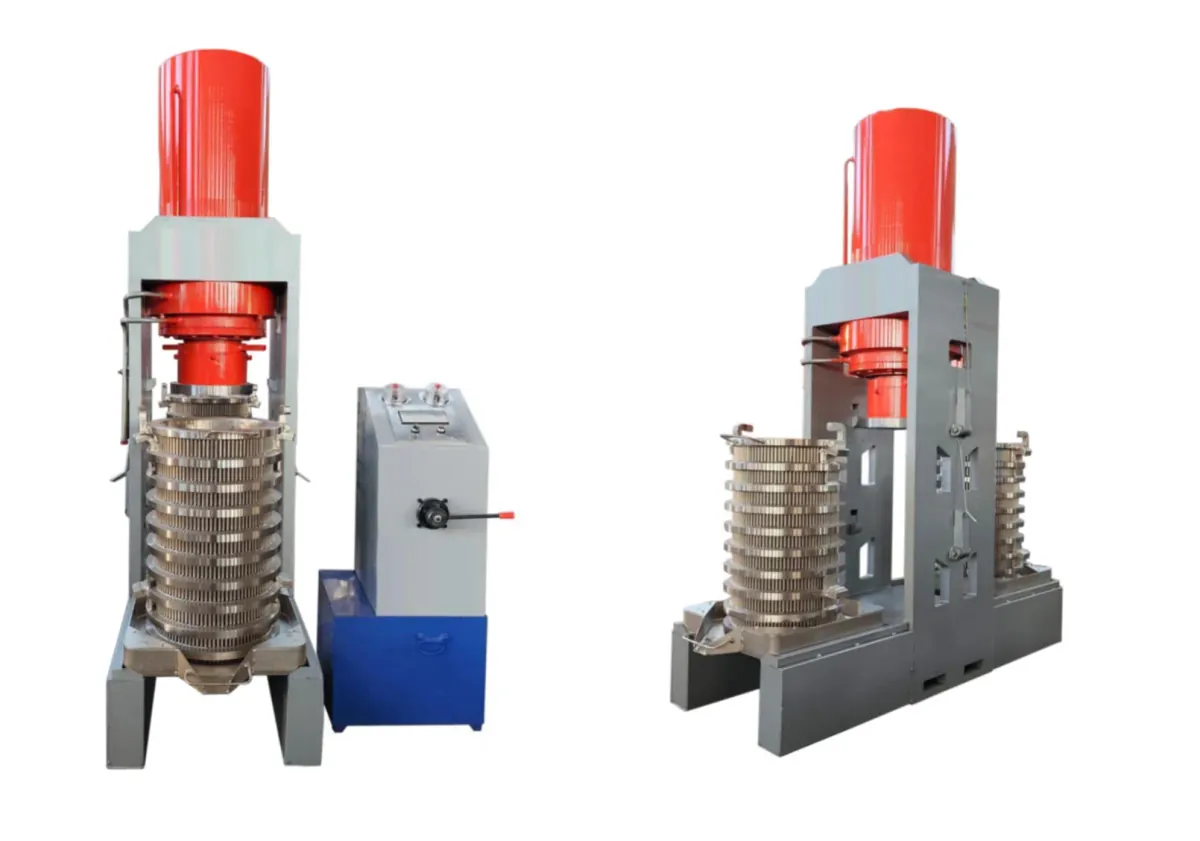
HN480 high pressure hydraulic oil press, 560-ton force at 72 MPa
Oil Extraction Machine: Hydraulic Press Range

High Pressure Hydraulic Oil Press

Model: HN480

1-Year Warranty • Lifetime Technical Support

High Pressure Hydraulic Oil Press: Specifications

System Pressure72 MPa
Pressing Force560 Tonnes (estimated)
Motor Power2.2 KW
Cylinder Outer Diameter480 mm
Tabung Press Standard Inner Diameter390 mm (customizable)
Tabung Press Standard Height800 mm (customizable)
Cylinder Standard Stroke850 mm (customizable)
MOQ1 Set

High Pressure Hydraulic Oil Press: Recommended Oil Seeds

These seeds are particularly recommended for this machine model. However, it can also process most other oil seeds with excellent results. Contact us if you have questions about a specific seed.

tea seedrapeseedpeanutwalnut kernelapricot kernel+ more oil seeds available

High Pressure Hydraulic Oil Press: Description

Overview

Looking for a current model? Most buyers today choose the HN500 Ultra High Pressure (620 t, 75 MPa) for maximum pressing force, or the HN426 Cold Press (500 t, 70 MPa) for premium cold-pressed oil. The HN480 remains in production for buyers replacing an existing HN480 or matching a previous quotation.

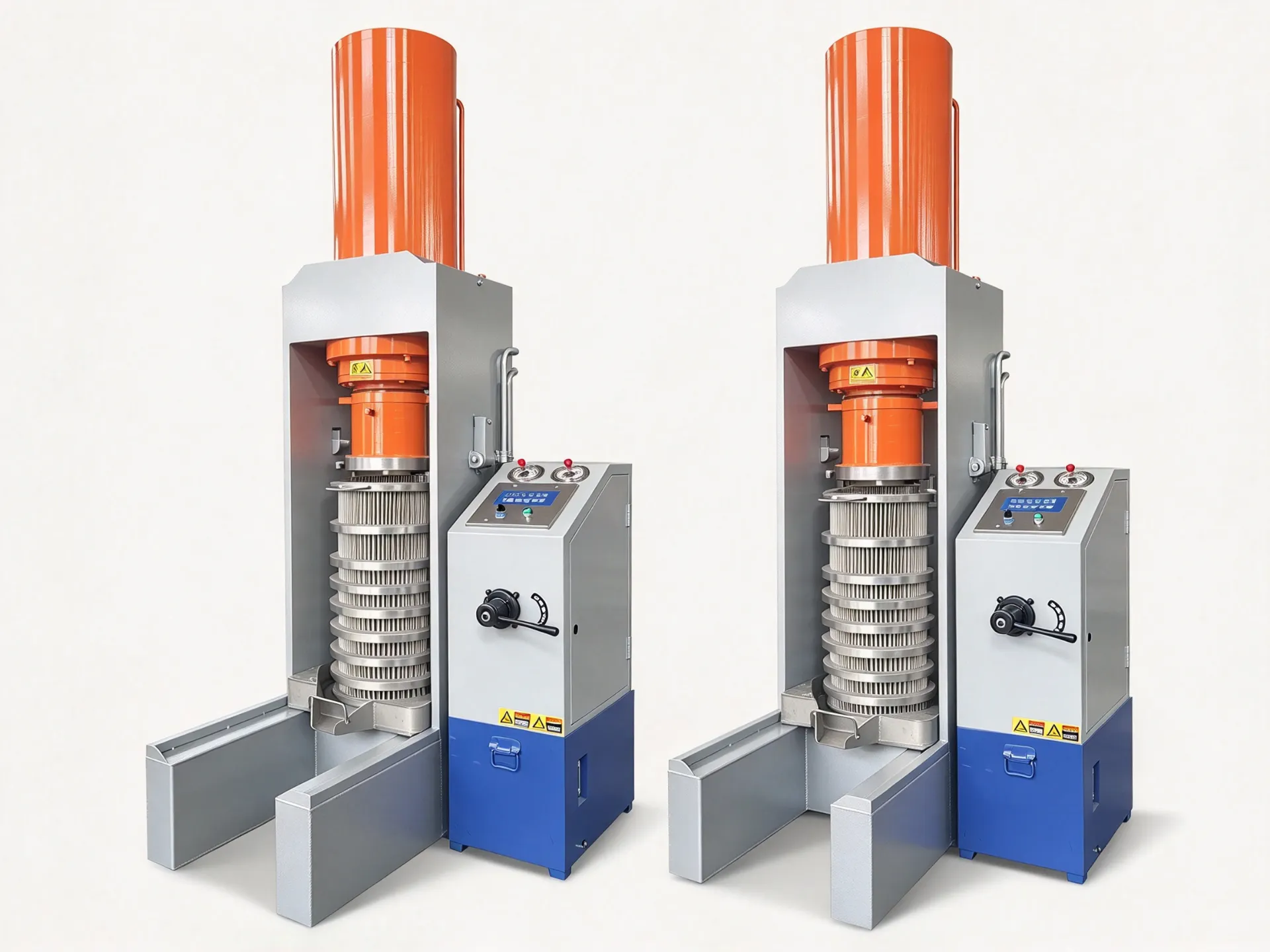
The HN480 is a 560-ton high-pressure hydraulic oil press with a 480 mm cylinder and 390 mm tabung press, running at 72 MPa system pressure. It sits between the HN426 cold-press model and the HN500 ultra-high-pressure flagship, handling both conventional and cold-press oil extraction. The 2.2 kW motor keeps operating costs modest.

This page serves as a reference for buyers searching specifically for the HN480 by model number — for example, to match an existing machine or compare specs against a previous quotation.

HN480 vs Current Models

ParameterHN480 (Previous Gen)HN426 (Cold Press)HN500 (Ultra High)
Pressing force560 tons500 tons620 tons
System pressure72 MPa70 MPa75 MPa
Best forMid-range high pressurePremium cold pressMaximum force & pressure
Tabung Press inner diameter390 mm390 mm390 mm
Batch capacity~100 kg~100 kg~100 kg

Choose the HN480 if:

  • You are replacing an existing HN480 and want a direct match
  • You are matching a previous quotation that specifies the HN480
  • You want a mid-range high-pressure model between the HN426 and HN500

Choose the HN426 if:

  • Cold pressing is your primary business and you want a dedicated cold-press machine

Choose the HN500 if:

  • You need maximum force (620 t) and pressure (75 MPa) for the hardest seeds
  • You want the current flagship ultra-high-pressure model

Compare HN480 with all models →

Suitable Applications

The HN480 handles both conventional and cold-press materials at high pressure:

  • Conventional oilseeds: Tea seed, rapeseed, peanut
  • Cold-press materials: Walnut kernel, apricot kernel
  • For the hardest seeds (in-shell walnut, copra, tiger nut), see the HN500 Ultra High Pressure instead

Still in Production

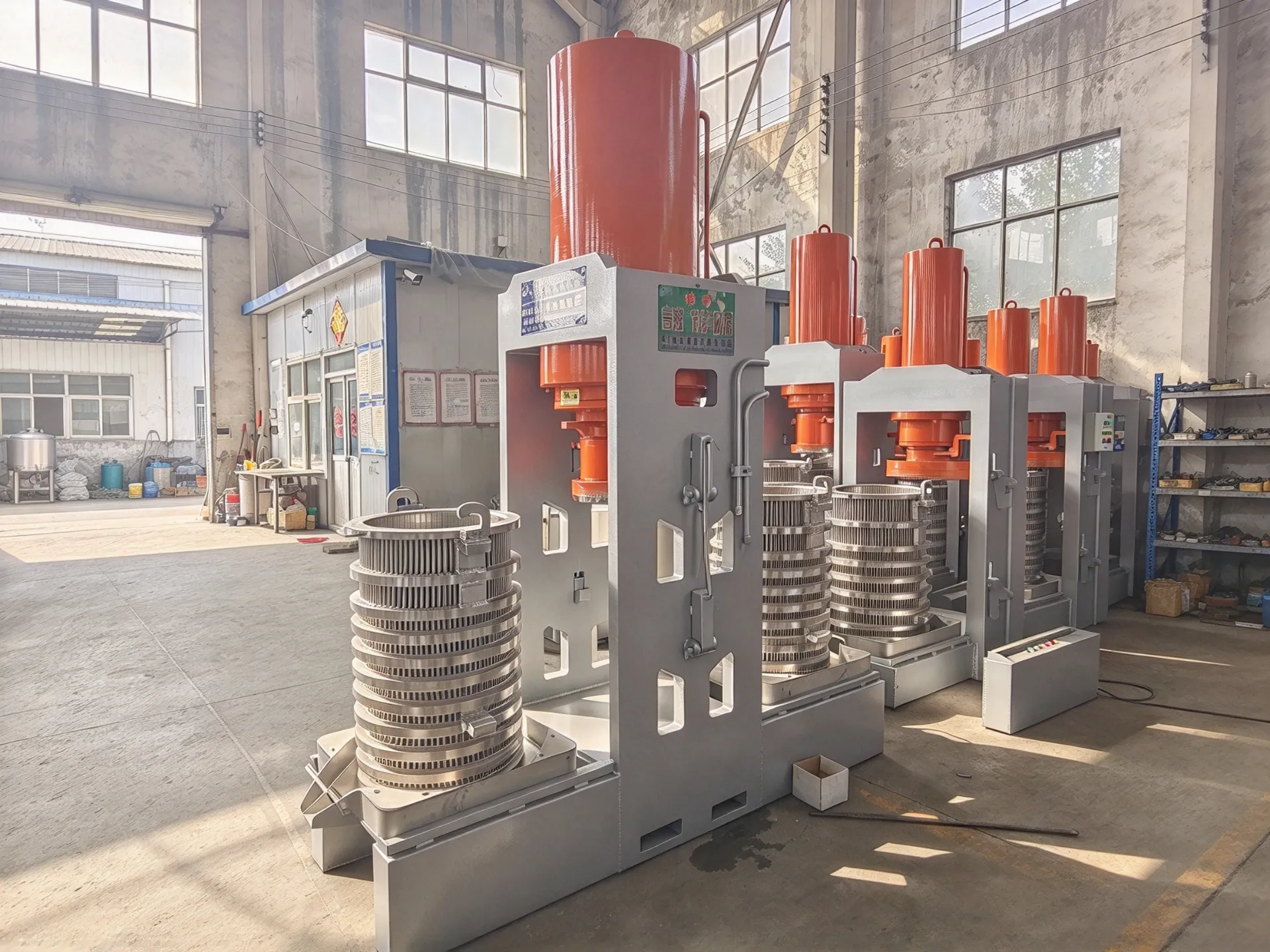
The HN480 is still manufactured and accepts orders. Production lead time is 15–25 working days for standard configurations.
Request an HN480 quote or compare current models →

High Pressure Hydraulic Oil Press — Frequently Asked Questions

What is the oil yield of the HN480 hydraulic oil press?
The oil yield depends on the raw material. For example, sesame yields 42-54%, peanuts 40-50%, and rapeseed 35-45%. The HN480's 560-ton pressing force and bar-type slotted tabung press design achieve approximately 2-3% higher yield (based on Haonuo factory tests with graded sesame and peanut at 6-8% moisture; results vary with seed variety and preparation) than traditional drilled tabung press presses.
What raw materials can the HN480 press?
The HN480 can press sesame, peanut, rapeseed, sunflower seed, flaxseed, tea seed, soybean, cottonseed, and more. It also handles cold-press materials like walnut kernels and apricot kernels effectively.
How long does one pressing cycle take?
Hot pressing (with pre-roasting) completes in 30-40 minutes per batch. Cold pressing takes approximately 2 hours to preserve oil quality at low temperatures. The actual cycle time depends on factors like seed moisture content, desired cake dryness, and pressing temperature. The microcomputer control system automates the entire process from feeding to cake discharge.
What is the recommended raw material moisture content for pressing?
The optimal moisture content varies by material type and pressing method. For hot pressing, we recommend 5-8% moisture before roasting, with the roasted material reaching 3-5% moisture. For cold pressing, the optimal range is 7-9% moisture. Proper moisture control is critical — too high causes oil emulsification and yield loss, while too low increases friction and reduces throughput.
What pre-processing equipment is needed before the hydraulic press?
Complete oil production typically requires several pre-processing stages including seed cleaning and sorting to remove impurities and damaged seeds, dehulling for high-shell-content materials like peanuts with shell removal rate at least 95 percent, moisture conditioning to reach optimal levels, roasting for hot pressing at 160-180 degrees Celsius to develop flavor and color, and seed crushing for improved oil flow. The press itself is the core, but pre-processing directly impacts oil yield and quality.
What is the difference between single and double tabung press configurations?
A single tabung press press processes one batch at a time. A double tabung press press has two tabung press on sliding rails — while one tabung press is pressing, you can load the other, nearly doubling your throughput. We recommend the double tabung press for commercial and industrial operations.
What power supply does the HN480 require?
The HN480 requires 2.2 KW motor power, compatible with both 220V/50Hz and 380V/60Hz power supplies. We can customize the electrical system to match your local power standards at no extra charge.
How many workers are needed to operate the machine?
Only 1-2 workers are needed. The microcomputer control system automates the pressing cycle, and the 4-hook cake removal mechanism makes unloading easy even after overnight pressing.
What warranty do you provide?
We provide a 1-year warranty covering all manufacturing defects, plus lifetime technical support. For this high-pressure model, this includes specific coverage for the 63 MPa rated hydraulic pump and reinforced cylinder seals. Spare parts are available from stock.
How is the machine shipped and how long does delivery take?
The machine is shipped in a wooden crate via sea freight. Delivery to most Asian ports takes 15-20 days, to African ports 25-35 days, and to South American ports 30-40 days. This is in addition to production time — 15-25 working days for standard models and 30-45 days for custom or special configurations (shipping time additional). Air freight is available for urgent orders.
Do you provide installation and training?
Yes, we provide detailed installation manuals, video tutorials, and remote technical guidance. For this high-pressure model, ensure your installation floor can support at least 2 tonnes and verify local pressure vessel compliance requirements. For large orders, we can send a technician to your facility for on-site installation and training at cost.
What certifications does the machine have?
All machines undergo 48-hour continuous full-load testing before shipment. For this high-pressure model, the full-load test is conducted at the maximum rated 63 MPa to verify seal integrity and structural performance.
Can the tabung press size be customized?
Yes, tabung press inner diameter and height can be customized to match your specific material and batch size requirements. Common customizations include larger tabung press for bulk materials and food-grade stainless steel tabung press for edible oil production.
What is the residual oil rate in the cake?
The residual oil rate in the cake is typically 6-8% for most materials with our bar-type slotted tabung press design, compared to 10-12% with traditional drilled tabung press presses. This means you extract approximately 2-3% more oil (based on Haonuo factory tests with graded sesame and peanut at 6-8% moisture; results vary with seed variety and preparation) from every batch.